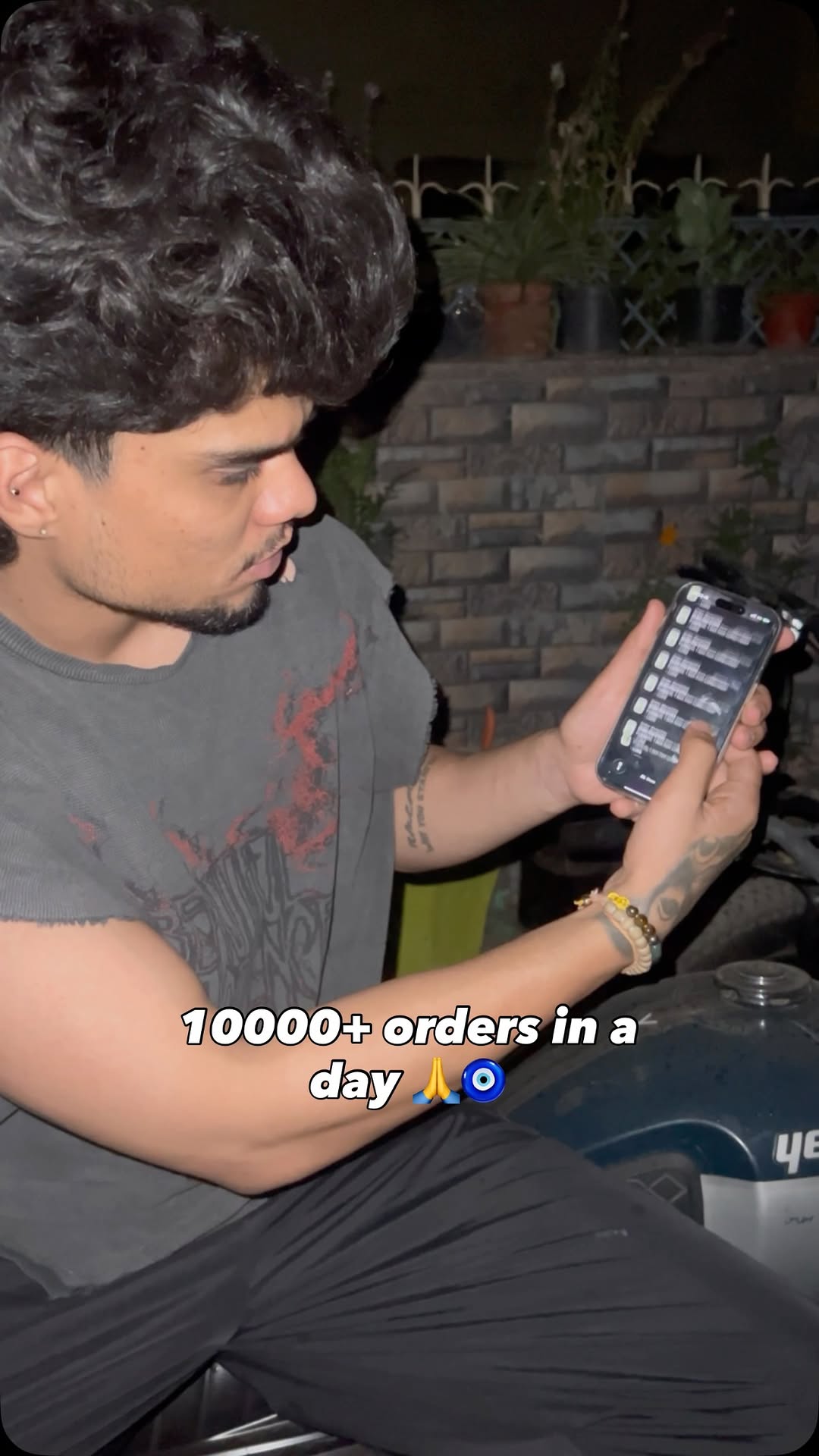
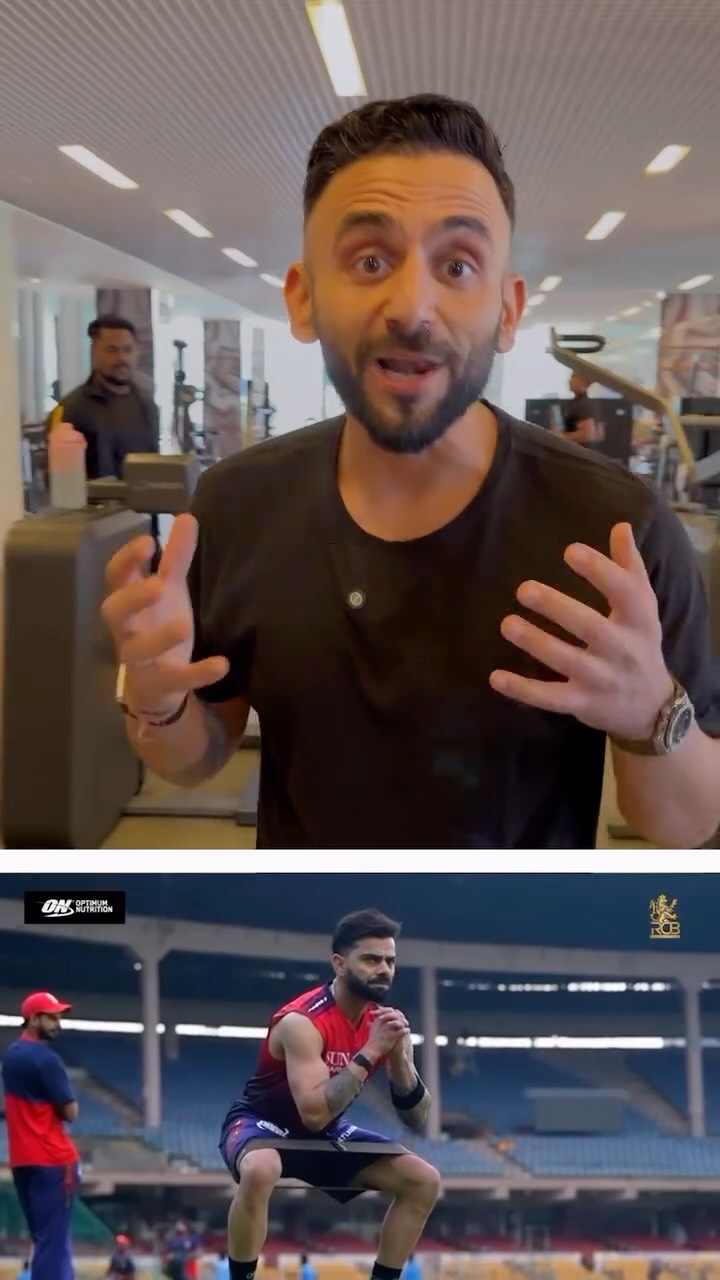
Galvor decoded MuscleBlaze’s entire live ad library, its creator posts, its competitors, and the people commenting underneath, into evidence for what’s working and, more usefully, what isn’t.
What Galvor reads from it
One of 1,323 creatives decoded exactly like this.
The evidence base
Creative total: 1,323 decoded, 978 MuscleBlaze ads + 50 MuscleBlaze creator videos + 193 Fast&Up ads + 54 TrueBasics ads + 48 Optimum Nutrition creator videos. Comment base: 3,328 on MuscleBlaze creator posts + 2,781 on Optimum Nutrition India’s. Every number in this document carries its sample size and source file.
Decode module · 01
Reads every frame
Pixels and audio in, a structured row out. It is the module the others lean on: every ad, every creator post, the same ~45 fields, the same vocabulary, so “what do we make?” finally has one answer instead of 978.
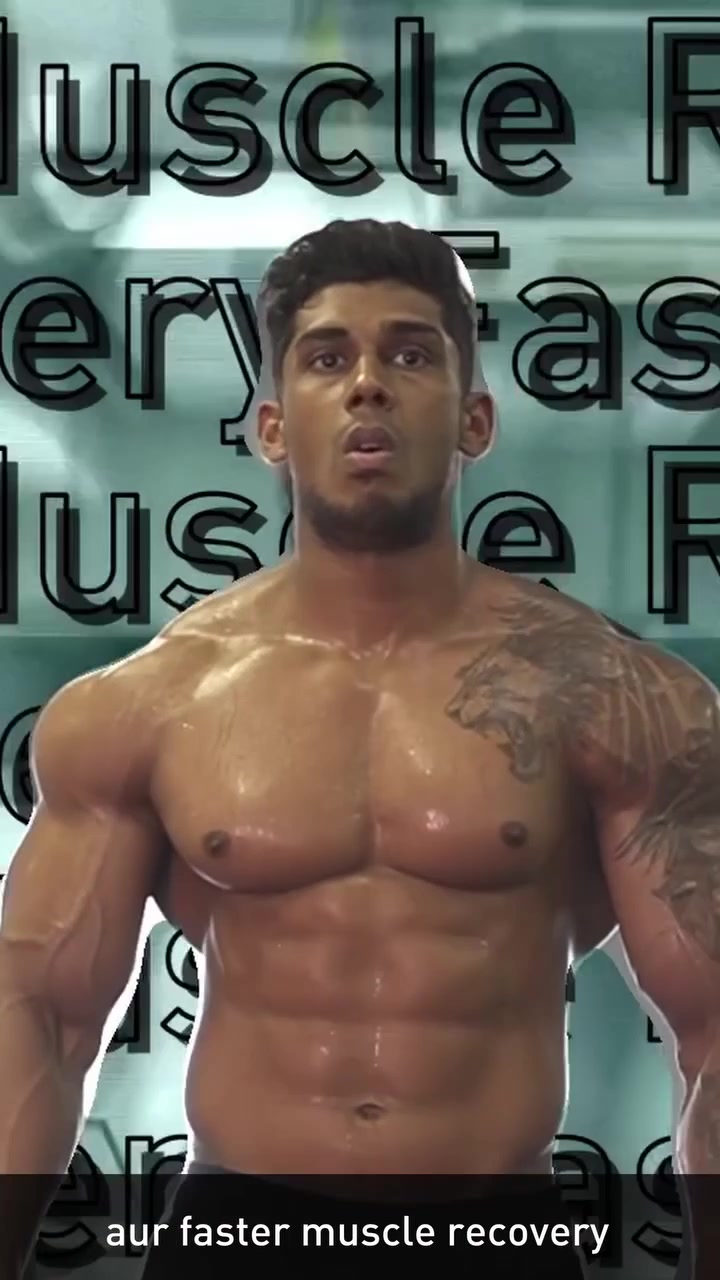
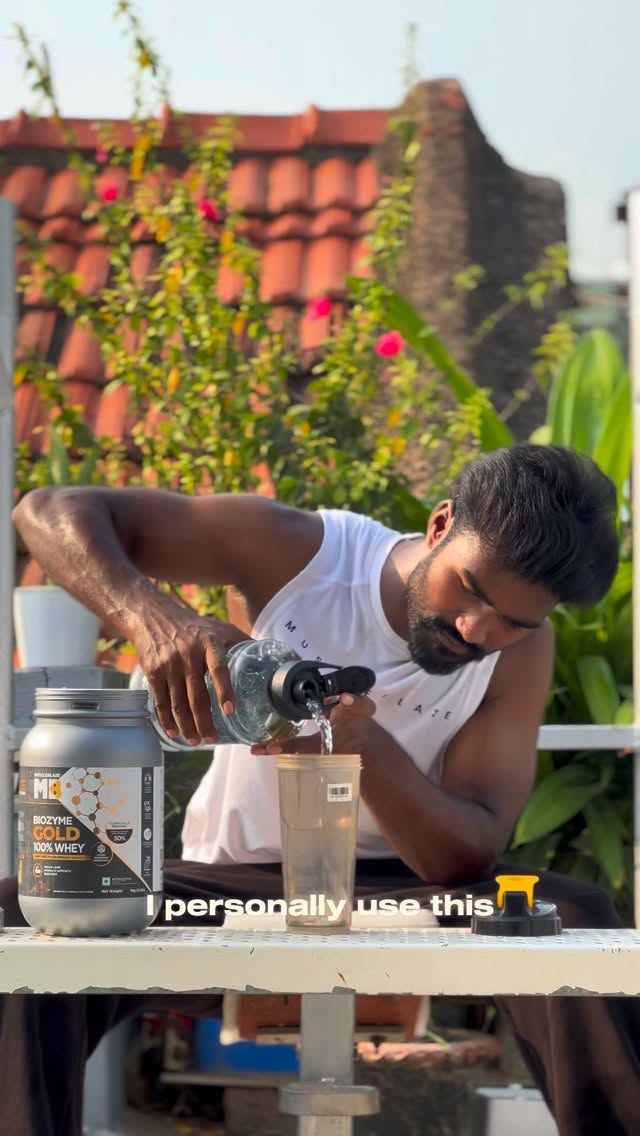
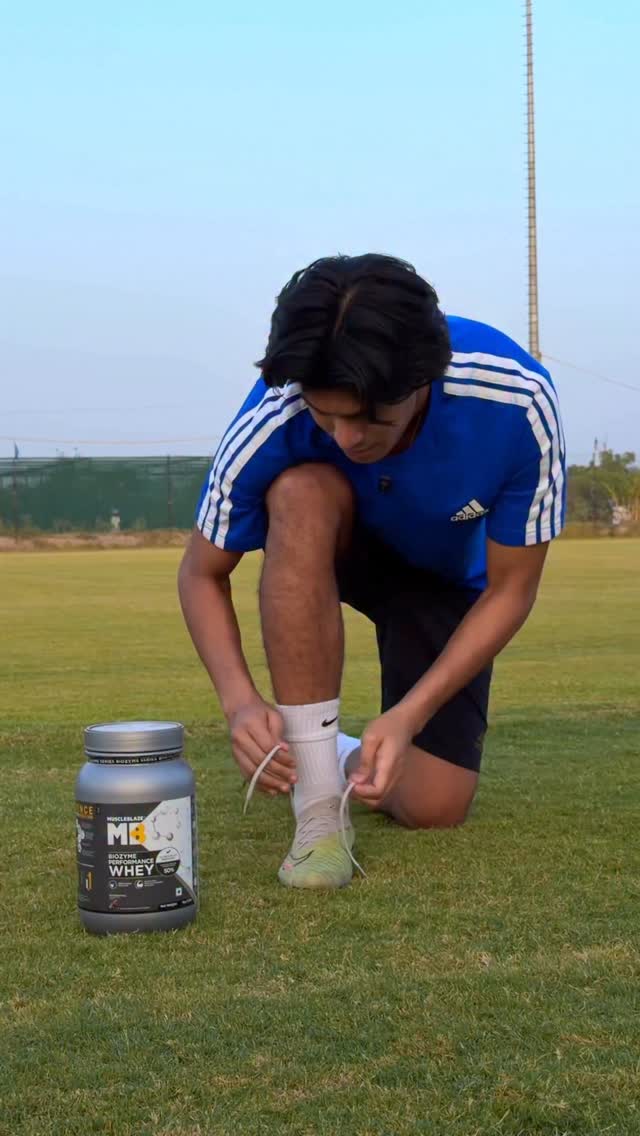
What “every frame” means here, precisely. We read every cut and every shot — on the post below, all 14 of 14 shots are identified, described, and checked for whether the product is on screen — plus the full audio, start to finish. What we sample rather than read exhaustively are the individual still frames in between. That distinction changes none of the numbers on this page, and we would rather state it than let the headline imply more than we do.
Measured counted straight off the video — no interpretation, no judgement, the same numbers every time.
Read: a fast, face-forward physique edit that holds the product back to the 8-second mark — the reveal, not the hook. Every number here is counted rather than judged, so it lands the same way every time.
Measured every one of the 14 shots identified, described, and checked for whether the product is on screen.
Format mix: 31% b-roll · 24% athlete-performance · 19% recipe-prep · 19% transformation-reveal. Product appears only in shots 8–10, the mixing moment — exactly the “product held back” pattern the signals flagged. We hold this same shot-by-shot timeline for all 1,323 creatives, not just this one.
Interpreted what the ad is saying and selling — each answer carrying how certain we are of it.
The read, in its own words: “Fast-paced aesthetic edit focusing on physique results linked to the usage of Biozyme whey. The audio is a Haryanvi song.” That audience signal — who each ad is really talking to — is read on every one of the 1,323 creatives and has never been added up. A persona map of the whole library is sitting there unread.
Interpreted who fronts it, and how it is made.
This is where organic and paid diverge: the post reads as brand culture, a losing objective over in the paid library, yet lands as a winner organically. It is one reason the two lanes are scored separately and never mixed.
The scorecard: did it beat what its reach predicted, and did anyone want to buy?
A reach-and-resonance asset: it comfortably beats what its view count predicts and earns a winner grade, but its comments are applause, not demand (0.8% buy-intent). Awareness creative done well — the conversion job belongs to a different profile, which is Creator Intelligence, next.
Every creative is read the same way against the same fixed vocabulary, and every reading is logged — so the same ad read twice gives the same answer, and a new ad slots into the picture below instead of restarting it. That repeatability is what makes the taxonomy an asset rather than a one-off report.
Decode module · 02
Fit over fame
The same teardown, pointed at a person instead of an asset. Reach is the number every roster is built on and it is the one number that cannot tell you whether a creator sells. This module reads the creative, the audience underneath it, and how far the post beat its own view count, then scores fit against the winning DNA.
What this is and isn’t. The pilot sample is 50 MuscleBlaze posts across 43 unique creators — nearly every creator appears exactly once (only one creator in the whole 98-post set has three posts). So this is the scoring method, demonstrated, not a creator ranking model: one post cannot establish consistency. Treat every score below as a read on a creative, attributed to a creator. Widening the base per creator is the first thing a pilot fixes.
Pro footballer, Mohammedan SC. MuscleBlaze × WrathX ambassador, code BORAMB. Posts in Assamese & English.
Provenance · Real — his profile, followers and engagement are pulled live; the creative read and the comment classes come from his actual post. Sample — the physical profile and the two fit scores are the Creator-Decode model applied by hand for this demo.
Live pulled from his public profile when this deck was built.
The headline signal: he punches far above his follower count. A 27K-follower account whose recent posts average 12.5K likes, and top out past 50K, is reaching well beyond its own audience. That reach-beyond-followers is exactly what MuscleBlaze’s winning metric rewards, and it’s why his brand post landed 89K views on 27K followers.
A verified professional athlete (footballer, Mohammedan SC), not a paid-only creator, which lines up with the single strongest proof mechanism on MuscleBlaze’s influencer winners: athlete endorsement (65% winner share).
Sample physical & on-camera profile. Age, gender and delivery are read from his actual post; the rest is the Creator-Decode model applied by hand.
Why physical tags matter for fit: MuscleBlaze’s winning influencer creative skews physique-forward and athlete-fronted. A real footballer’s build and on-camera authenticity map directly onto that DNA rather than being retrofitted to it.
Live content mix across his last 12 posts.
A useful surprise the decode surfaces: his highest-engagement posts are in Assamese, Bihu greetings, hometown content, pulling 46K+ likes. He carries a Northeast-India regional audience most fitness rosters don’t reach, on top of the pan-India football following.
Brand integration is native, not bolted on: his MuscleBlaze and WrathX posts sit inside an athlete’s real feed with code BORAMB, so they read as endorsement rather than an ad.
Score, how close he sits to MuscleBlaze’s winning DNA. Components weighted, each grounded in a real signal.
A verified athlete whose creative already matches the MuscleBlaze winner profile on nearly every axis.
Weighted: category 25% · DNA 30% · audience 25% · affinity 20% → 88 / 100. The one softening factor is audience overlap, his football/regional following is broader than pure gym, which is a reach asset but dilutes hardcore-lifter density. Open decision for RD: these four weights are a judgement call, not a fitted model, and they are exactly the kind of parameter a pilot should set with you rather than for you.
Score, likelihood of moving ROAS, read through MuscleBlaze’s engagement-winning metric. Not measured ROAS, that needs the performance-data connection in the closing section.
He already does both jobs, beats his reach and converts in the comments, and there’s a code to measure it.
His MuscleBlaze post is the cohort’s 3rd-best winner (blended 0.805): a 7.1% engagement rate that beats its reach, and 11% comment buy-intent, the second-highest genuine purchase demand in the set. Two things stated plainly: that 11% is 3 comments out of 27, and consistency is unscoreable because he has one post here. Because code BORAMB already exists, the moment HealthKart shares redemption data this stops being a likelihood and becomes a measured number. This is the profile creator scoring is built to find.
The score that sees both
Every creator post gets one blended number:
The profile it surfaces: @gaurav_bora, 89,030 views, above-reach engagement and 11% buy-intent. Blended 0.81. The both-jobs creator nobody’s leaderboard would catch.
Open decision: 60/25/15 is a starting weight set chosen for this pilot, not a fitted result. With redemption data it should be re-fit against revenue, and that is your call to make, not ours to bake in.
Attribution rails already exist
12 personal promo codes appear inside the ad library itself; 29 of 54 creator captions carry one:
Redemption data for these codes exists somewhere in HealthKart. Join it to the decode and creator scoring stops being a proxy, that’s the closing section.
Productized, not theoretical
Fit against MuscleBlaze DNA
Creator lookup — a handle in, fit and ROAS-lift out.
The creator network is also measurable: 78 verified accounts commented on these 54 posts, including @ankit_baiyanpuria leaving a 205-like comment on another MuscleBlaze creator’s post.
Decode produces structure. Structure on its own is a bigger spreadsheet. Brand Intelligence is the layer that remembers what your brand is, reads the decode against it, pushes the next thing to make, and answers when you ask. It is the difference between a report you receive and a system you use.
Read this before the next four sections. Everything above was MuscleBlaze’s real data. These four are product capabilities, and MuscleBlaze is not a Galvor account yet — so no MuscleBlaze version of them exists. What you’ll see instead, always labelled: a Sample panel — what the module would hold for MuscleBlaze, built by hand from the decode numbers you just read, nothing invented — beside a Mockup of the shipping screen, drawn on those same numbers. The screens are live today on other accounts; the mockups show what they would hold for you. Where a capability is not built, it carries a Not built chip and says so. We would rather show you the seam than paint over it.
Brand intelligence · 01 — the moat
What Galvor remembers
Most AI forgets.
Galvor remembers.
Every campaign makes the system more valuable. Your history becomes a proprietary intelligence layer that generic models and point tools cannot reproduce — and it’s yours alone.
Compounding intelligence
Prediction accuracy by December
96%
up from a 41% cold start in month one
Every campaign feeds the memory — so predictions get sharper the longer you run, and no competitor can replay your history.
Which hooks, formats, stories, visual patterns and CTAs worked for this brand.
Day one for MuscleBlaze: 978 ads read on every dimension — the template you repeat, and the rare structures that outlive it.
Which creators matched the brand, reached the right audiences, and delivered.
Day one: 43 creators, scored on fit rather than fame — plus the 12 promo codes already printed in your ads.
How communities responded, what they trusted, and what triggered purchase intent.
Day one: 2,732 commenters profiled, eight segments — including the 5% skeptic cluster nobody is answering.
Which recommendations were acted on — and what happened afterward.
Starts the day you connect. This is the one that turns a report into a system that learns from you.
The shipping screen, drawn on MuscleBlaze’s real numbers.
Mission
“Make serious training culture legible and buyable for India — proving purity with lab evidence, speaking gym-insider.”
Tone · measured, not asserted
Language
Where the memory lives
Memory isn’t an abstraction — it’s a screen you can open, edit and roll back. It answers “why did it suggest that?”, and it’s the reason the suggestions sound like MuscleBlaze.
Stated plainly
The screen ships today on other accounts. MuscleBlaze’s memory does not exist yet — it starts the day you connect, and the Decode module is what it opens with. How heavily each source counts is your decision, not our default.
Brand intelligence · 02
Executive-ready
Everything the four Decode modules found, gathered in one place. Four insight subsections — creative, creator, contributor, competitor — each stating what was read, the numbers behind it, and the limits it carries.
The decoded creative, read back to the brand: the culture voice lands, and the selling mechanics are switched off almost everywhere.
Launch month of currently-live ads
One month of creative now outweighs the previous two years of survivors combined. Which June patterns deserve to exist next June? Today, nobody can answer that.
Snapshot of active ads only (scraped 7 July 2026): ads launched earlier and already retired are invisible here, so early months undercount. What the chart can say honestly: the live library is dominated by weeks-old creative, and only 27 ads (2.9%) have proven they can live a year, 14 of them past 500 days.
The top MuscleBlaze creator posts of the last six months aren’t supplement ads. They’re an anime collab, a doctor-framed myth-buster, a fit-mom vlog, and a post literally captioned “protein isn’t just a gym-bro thing.” Click any tile to watch the actual reel.
The sub-brand lane is live too: WrathX energy shows up organically in creator posts (@darpan_narula, 577,702 views). Sample: 54 SERP-harvested creator posts, 7–180-day window, videos only, brand accounts excluded. Metrics as fetched 7 July 2026.
The culture voice works, 77% of the 978 tagged ad videos speak in gym-culture insider language, and it lands. But the mechanics that actually convert are switched off almost everywhere:
Why it matters: Creative Intelligence shows these switched-off levers are exactly the ones that win when used, flat-discount ads survive at 40% vs a ~30% base, hard CTAs at 37% vs 25% soft. A strong voice with the selling mechanics turned off is the single most fixable gap in the paid lane. n=978 tagged videos, avg length 39 s.
979 MuscleBlaze ad videos, every one tagged on every dimension below, the codified answer to “what do we actually make?” It exposes a template the brand mass-produces: product-sales, creatine, male athlete, gym. Whether that template earns its dominance is a question for Insight, which reads this genome against survival.
The default MuscleBlaze ad
A product-sales creative for creatine, fronted by a male athlete-bodybuilder (25–34) in a gym, opening on a curiosity-gap hook with a face in the first 3 seconds, running 39 seconds.
Every bold term above is the largest bucket of its dimension. Which of these defaults the data actually rewards, and several don’t, is what the Insight module reports.
The first 3 seconds
The lanes beyond the gym
Sub-brand and audience lanes are already visible in real creator posts, the taxonomy tracks them as first-class segments, not afterthoughts.
Reach is being used as a proxy for creative quality, and it isn’t one. Here is the creator lane once the comments underneath are read and scored.
The key problem: reach is being used as a proxy for creative quality, and it isn't one. The same brand, the same six-month window, produces a 4,400× reach spread and a 13× resonance gap between posts at identical view counts, even the same creator swings 9× against herself. Nothing at the brand currently reads the creative that causes this, so creators keep getting ranked and booked on the one number that can't explain it.
One brand, one window, a 4,400× reach spread
54 creator posts in six months, from 653 views to 2.88 million. Each dot is a real post (log scale, hover them).
Same reach, 13× the resonance
Two posts at the same ~1.2M-view scale, 13× apart in likes, and neither converts: buy-intent is ~0% on both. @dik_tei's thin comment base skews negative instead (24% product-skeptical, 1 of 25 classified as positive), while @priyanshu_7_8_6's much larger, mostly-praise thread (144 comments) still produces only a single buying signal. Creator lists ranked on reach cannot see either of these things. The creative, and the comments under it, can.
Even the same creator swings 9×
@sreeya_iyerr, five MuscleBlaze posts, same window. Creator identity alone doesn’t explain performance, the creative does, and nothing at the brand currently reads the creative.
Views do not tell you who wants to buy.
Comments reveal something view counts cannot: whether anyone actually wants to buy. Two real MuscleBlaze creators posted in the same window and did completely different jobs.
The reach asset
2,883,788 views · engagement in the 94th percentile for its reach · blended score 0.89
Colossal awareness, no demand signal. Priceless for reach, as long as nobody books him expecting conversion.
The conversion asset
239,813 views · engagement in the 82nd percentile · blended score 0.80
A 240K-view Telugu creator whose thread is literal purchase demand, 35× the average across everything we read buy-intent rate. A likes-based ranking would bury him. (Small comment base: 46 classified, flagged, not hidden.)
The score that sees both
Every creator post gets one blended number:
The profile it surfaces: @gaurav_bora, 89,030 views, above-reach engagement and 11% buy-intent. Blended 0.81. The both-jobs creator nobody’s leaderboard would catch.
Caveat carried openly: most creators appear once in this 54-post sample, these are one-post reads until the pilot widens the base.
Attribution rails already exist
12 personal promo codes appear inside the ad library itself; 29 of 54 creator captions carry one:
Redemption data for these codes exists somewhere in HealthKart. Join it to the decode and creator scoring stops being a proxy, that’s the closing section.
Productized, not theoretical
Fit against MuscleBlaze DNA
Creator lookup — a handle in, fit and ROAS-lift out.
The creator network is also measurable: 78 verified accounts commented on these 54 posts, including @ankit_baiyanpuria leaving a 205-like comment on another MuscleBlaze creator’s post.
The audience decoded into nameable segments, and the comment layer weighed by the likes it earns instead of merely counted.
We profiled 2,732 of the 2,821 people who commented on MuscleBlaze creator posts, bio, profile picture, recent posts, and their comments, and clustered them. The hardcore lifter crowd is just 7% of the room. The tent is already much bigger than the gym. (Full artifacts behind this tab: the MuscleBlaze audience report and comment-themes report, both already delivered in sample form, alongside the same pair for Optimum Nutrition.)
The two segments that matter most are the smallest: a 7% lifter core that is 52% brand-supportive (3× any other group), and a 5% skeptic cluster that is 65% negative. n=2,732 · profiled from public data · 74% of stances read neutral or unclear, so supportive/negative shares describe only the readable minority.
What the three segments that matter are telling you
A small group that actually trains with the product and identifies with the brand, not just passing by.
The move → the highest-value, lowest-cost advocates the brand already has. An ambassador / UGC core.
The largest segment by far, but it isn’t vocal, its size shouldn’t be read as engagement or loyalty.
The move → untapped reach that isn’t yet converting to affinity, the audience to prompt into real interaction.
Their doubts cluster around one recurring question, creatine purity and safety, echoing the wider comment-theme analysis.
The move → a small cluster, findable in one place, before its doubts spread to the passive majority.
This is the whole point of decoding the audience: 74% of the feed is unreadable noise, but the 17% that carries a stance splits cleanly into a core to reward, a majority to activate, and a cluster to get ahead of, each a findable, nameable group rather than a wall of emojis.
The key problem: comments are being counted, not read, so the actual signal in them is invisible. 77.8% of comment volume is low-effort noise carrying only 25% of the like-weight; the substantive fifth (questions, doubts, buy-intent, defenses) goes unweighted. With no radar reading that layer live, the single biggest engagement moment of the half-year was an unverified rumor the brand never saw coming and never fact-checked in the room.
Comment volume is not comment weight
3,328 comments on MuscleBlaze creator posts, weighted by the likes they earned:
Emoji bursts, one-word hype and friend-tags are 77.8% of everything written but earn 1.44 likes each. The signal, product questions, purity doubts, buy-intent, defenses of the brand, lives in the other fifth. Counting comments misses it; weighing them finds it.
The period’s biggest moment was an accident
When an unverified “FSSAI is banning creatine” claim went viral in May, one reaction reel (@anushkavyas4, 800K views) collected 9,858 comment-likes, 66% of the entire window’s total, at 13× the average intensity. The audience rallied for the brand and against the regulator. MuscleBlaze’s best engagement moment of the half-year wasn’t a creative decision, and there was no radar to catch it live.
We fact-checked the trigger: no FSSAI ban or restriction on creatine exists, no notification, no gazette entry, no mainstream report. A rumor moved two-thirds of six months’ engagement. That is exactly why a comment radar earns its keep.
74% of commenter stances are unreadable noise to a human skimming the feed. Decoded and weighted, the same comments become segments, warnings, and purchase signals.
Underneath the segments sits the machinery: every comment sorted into one of six intent classes, like-weighted rather than tallied, and every commenter profiled from public data.
“Comments → buyers” is the ambition; here is the measured reality. Across 5,878 classified comments there are 62 that actually signal buying intent — 1.1%. That is far too rare to rank a roster on, and we would rather say so than dress it up. What this module demonstrably does: find where that 1.1% concentrates (37% on one post, 0% on a 2.88M-view post), surface the questions and doubts that come before a purchase, and name the people asking. That is a targeting instrument, not an attribution one, and the difference is worth being precise about.
The six-class read, every comment
5,878 comments across 91 posts, every one classified:
Look at the shape honestly: 92% of everything written is noise or applause. The commercially-readable layer is 449 comments, 7.6%. That is not a disappointment, it is the finding, and it is why weighing beats counting. A dashboard reporting “6,109 comments, engagement up” is reporting the 92%.
MuscleBlaze is producing creative faster than it can prove it works, and read from the outside, each rival exposes something it is missing. The paid lane, then the whole tracked field, side by side.
“The whole field” is four brands, and one of them is yours. Being exact: TrueBasics is HealthKart-owned — a sibling, not a competitor — and only 54 of its 300 ads are tagged (18% coverage), so every TrueBasics read is directional. That leaves Fast&Up as the only true external competitor with a fully tagged library (193 of 277), plus Optimum Nutrition read through its influencer lane rather than its ads. Named and not yet scraped: Oziva, Avvatar, BigMuscles, Whole Truth. The method generalises to all of them; the coverage today does not, and pretending otherwise would be the easiest lie in this document.
The key problem: MuscleBlaze is producing creative faster than it can prove it works. 945 active ads is 3 to 3.4× either tracked rival's library, but the typical ad survives only 12 days, a shorter median than both smaller competitors. Volume is not the same asset as durable, proven creative.
Same category, three very different creative economies
MuscleBlaze runs more than 3× the live creative of either rival, yet neither rival's typical ad is replaced faster. Fast&Up keeps its (much smaller) library alive nearly twice as long. That combination, high volume with short median life, is the signature of a library that keeps launching rather than compounding.
Inside MuscleBlaze's own library: a long tail, not a normal spread
A mean that sits nearly 3× above the median is the statistical fingerprint of a long-tail distribution: most ads die fast, and a handful of much older survivors (the 638/619/525/511-day fish-oil ads) pull the average up. In practice: hundreds of creatives launch, most don't last a month, and only a small minority become durable winners, a creative-efficiency gap, not a creative-production shortfall.
Scope, influencer lane: 48 creator posts · 2,781 comments (comment-themes report) · 1,966 commenters profiled (audience report) · head-to-head comparison built with the same method as MuscleBlaze’s.
MuscleBlaze vs Optimum Nutrition, three key insights
3,328 MB comments drew 14,942 likes; 2,781 ON comments drew only 6,240, near-identical volume, MB’s audience reacts far more readily. A quality gap, not just scale.
MB’s spike is fans defending the brand through the creatine controversy, on-topic and favorable. ON’s spike is borrowed celebrity buzz (IPL, a cricketer’s farewell) with nothing to do with the product.
MB’s highest-engagement comments are about what it sells. ON’s biggest posts are essentially unrelated to its product. MB converts attention into product conversation; ON doesn’t.
Owned vs rented engagement
Both brands’ comment engagement is spike-driven. The spikes are about opposite things:
MuscleBlaze’s spike, about the brand
66% of all comment-likes landed on one post: the creatine-controversy reel, where the audience defended the category and the brand against a rumored regulator action.
Optimum Nutrition’s spike, about celebrities
76% of all comment-likes landed on four posts, a cricket commentator’s farewell, a star’s dating rumor, IPL banter. None about the product. Genuine product talk: 65 comments, ~2% of likes.
Comparable samples, same method: MB 3,328 comments / 54 posts vs ON 2,781 / 48. Raw intensity favors MB 4.49 vs 2.24 likes-per-comment; strip each brand’s spike and the gap narrows (≈1.6 vs ≈1.1, computed), the honest headline is what the engagement is about, not its size.
Audience composition, same 8-segment method, both brands
MuscleBlaze’s audience is fitness-native and 3× richer in loyal lifters. ON’s is a quarter celebrity fandom that never advocates. The asset ON is missing, MuscleBlaze already owns.
On the AI shelf the duel inverts: ON is first-named in 20 of 64 assistant answers vs MuscleBlaze’s 12, and took the flagship “best whey in India” slot on all 4 assistants. Reach footnote: ON’s 48 posts total 155M views vs MB’s 12.2M, but two celebrity posts alone contribute ~110M of it; that’s a celebrity lane, not a baseline gap. On medians the picture flips entirely: MB 83,322 views vs ON 31,763.
Scope, paid lane: Meta Ad Library, 277 live ads, 193 creatives read on every dimension (70% coverage). The only fully-tagged external competitor in the set.
The direct-response machine
Fast&Up runs the opposite playbook to MuscleBlaze: 82% pure sales objective, 45% fear/pain-point hooks, 37% problem-agitate-solve scripts, a 60% fat-burner product skew, and it iterates hardest, with 133 of 277 ads carrying variants (up to 10 per concept). Most telling: its five longest-surviving ads are all creator coupon-code videos (codes RAM25, SYLESH10, SRIV10…, running 420–483 days). In this category, creator-coded attribution creative is already the proven longevity play, and MuscleBlaze has 12 such codes sitting unanalyzed in its own library.
193 Fast&Up creatives read (of 277 live ads) · read and scored exactly the same way as MuscleBlaze’s.
Scope, paid lane: Meta Ad Library, 300 live ads, only 54 tagged (18% coverage). And note: TrueBasics is HealthKart-owned, so this is an in-house contrast, not a competitor read.
TrueBasics, HealthKart’s own sibling brand, runs content marketing wearing an ad’s clothes: expert-fronted, home-set, spoken-to-camera education with almost no ask. A useful in-house contrast: the same parent company already operates the opposite creative posture to MuscleBlaze, and neither can currently see the other’s numbers on one screen.
n=54 tagged creatives of 300 live, directional reads only (each creative ≈ 2 percentage points); the big gaps (>20 pp) are robust in direction. The other 246 ads are untagged, so this brand is the thinnest evidence in the deck, shown, never headlined.
Scope, paid lane: Meta Ad Library metadata, 174 live ads (cadence and iteration; not yet content-tagged).
FitMuscle TV is the cautionary tale of the cadence chart: high creative churn, five-day median survival, little variant testing. Volume without survivors, the pattern MuscleBlaze’s recent wave risks repeating at 4× the scale.
Ad-metadata level only (not yet read on every dimension), cadence and iteration stats from the Meta Ad Library snapshot, 7 July 2026.
Every creative we read, every tagged creative of all three brands, same taxonomy. These gaps are strategy, not noise:
MuscleBlaze is the only brand running the athlete/aesthetic culture lane, 45% athlete-fronted, 47% gym-set, 27% music-only, 23% physique-focus framing. Fast&Up owns direct response; TrueBasics owns education. Product mixes barely overlap (creatine 56% / fat-burner 60% / whey 44%), so these are category choices as much as creative ones, which is exactly why they need to be read together, on one screen.
The newest shelf in the category, and a rival owns it.
Competitor Intelligence isn’t only about their ads. We asked four AI assistants 64 buyer questions without naming any brand, then checked which brand each answer named first. MuscleBlaze is known and mentioned often, but the recommendation slot mostly goes to Optimum Nutrition.
Where MuscleBlaze is losing the AI shelf, ranked by what it costs
Already landed, the base to defend: mass gainers (all 4 assistants), “top Indian brand” (3 of 4), Biozyme and its lab testing cited unprompted. Every gap above is measurable, and none of it is visible in a dashboard the brand owns today. We re-run this check on a schedule, so AI-shelf position becomes a monitored line rather than a one-off audit.
AI assistants know MuscleBlaze but rarely recommend it. We probed 64 buyer questions across four assistants without naming a brand, then read which brand each answer named first — the shelf buyers now see before they ever reach a search result.
AI assistants know MuscleBlaze but rarely recommend it.
We asked four AI assistants 64 buyer questions without naming any brand, then checked which brand each answer named first. MuscleBlaze is known and mentioned often, but the recommendation slot mostly goes to a rival.
Where MuscleBlaze is losing the AI shelf, ranked by what it costs
Already landed, the base to defend: mass gainers (all 4 assistants), “top Indian brand” (3 of 4), Biozyme and its lab testing cited unprompted. Every gap above is measurable, and none of it is visible in a dashboard the brand owns today. We re-run this check on a schedule, so AI-shelf position becomes a monitored line rather than a one-off audit.
Brand intelligence · 03
Next best action
The module that closes the loop: decode found the pattern, Memory knows the brand, and this turns both into the next brief. The list below is not a creative opinion, every row is a measured lift from your own library, ranked by what you are leaving on the table.
Every row below is a measured move from your own library, ranked by what it leaves on the table. Four sit on the creative itself, built on its weakest corner — whey creative reaches the winner tier at 14% against a 30% average across 151 ads, while whey is the flagship. Three more sit on the brand around it: the creators you back, the comments you answer, and the AI shelf you’re missing from. One thing to stop. Each with the number behind it.
Move whey off routine integration — your most-used format — and onto straight pitch: product, claim, price, buy.
+25% above the library average. Your longest-running ad — 511 days — is exactly this structure. Copy the structure, change the product.
Open on the tub, not the talent. Your default — a face in the first three seconds — is the biggest bucket you own and it underperforms.
602 of 978 ads lead with a face. Product-only framing survives at more than double that rate.
Put the proof in the frame as a caption, not in the voiceover. It is the claim you own and the one you under-use.
Lab-tested proof is already 61% of your library against rivals’ 23% — the moat. Award proof beside it is 4%. Assistants cite Biozyme’s lab testing unprompted.
Put a flat discount on it and ask for the sale outright. Both are close to absent across a 945-ad library.
Pair the two: hard CTAs survive at 37% against 25% for soft.
Your highest-reach creator generates no purchase intent at all. The two who do sit well below him on reach — and no reach-ranked roster can see it. Score creators on the comments underneath, not the view count on top.
Codes already exist to price this. Redemption data turns intent into revenue, not a proxy.
An unverified creatine rumour drew two-thirds of six months of comment engagement and the audience defended you — with nothing watching it happen. A standing listen-and-respond loop turns the next one into a moment you own.
We checked: no such ban exists. A rumour moved your biggest moment; the response shouldn’t be left to chance.
Assistants know you better than anyone in the category and still hand the recommendation to a rival. It’s the newest shelf in the market and the only one nobody at the brand is watching. Structured presence — Wikipedia, category pages, cited proof — is what closes it.
The AIEO insights tab is where this gets worked — mentioned most, recommended least is the gap to close.
The instinct for a whey reset is a transformation reel. Your own data says it is the single thing not to make — and every generic playbook will tell you the opposite.
Transformation underperforms in every field it appears in. Carried openly: the −21% rests on just 9 creatives, so it is flagged too-few and never headlined — but three independent fields point the same way, and that agreement is the finding.
What the screen actually does
Pick a low performer. Get the opportunities ranked by impact, see where that creative sits on every axis, study the top performers that beat it, and read step-by-step edits — each one pointing at the number behind it and at the brand’s own approved language. Thumbs up or down feeds straight back in.
On a MuscleBlaze account, those axes are the 16 dimensions you scrolled through, and the exemplars are your own 511-day survivors. Every clause traces to a row in the table above and a value in Memory — which is the whole design goal: a brief you can argue with, because you can see what it is citing.
The shipping screen, drawn on MuscleBlaze’s real numbers.
Opportunities, ranked by impact
Suggested edits
Recommend edits — every suggestion points at the number behind it.
Not built The word “Push” is doing work we haven’t earned
Be clear-eyed about this one. The recommender is real, shipping, and everything above is what it produces — but it is entirely pull today: a human opens it, picks a creative, clicks Generate. There is no scheduler, no trigger, and no alerting in the build; nothing proactively arrives in your inbox saying “whey creative just dropped below base, here’s the brief.” That is the “(Push)” half of this module’s name and it is a roadmap item, not a feature. We are flagging it because the FSSAI moment in Contributor Intelligence is precisely the case for push, and it would be easy, and wrong, to let this section imply we already had it.
Every recommendation above comes from your own library — including what not to make, which a generic playbook will never tell you.
Brand intelligence · 04
Plain English, on demand
The last mile. Everything in this document took a team and a week; the point of the decode is that the fourteenth question, the one nobody anticipated, should take twenty seconds. Ask in plain English, get an answer grounded in your own library, with the sample size attached, and turn it into the next creative.
Real questions, answered from the real library. Phrasing illustrative; every number is live.
@sai_rocks_1919 and @gaurav_bora, and neither would top a reach-ranked list. Sai: 239,813 views, but 37% comment buy-intent (17 of 46 classified), 35× the 1.05% average across everything we read. Gaurav: 89,030 views on 27,316 followers — comfortably beating what his reach predicts — 11% buy-intent, and code BORAMB is already live so redemption is measurable from day one. For contrast your highest-scoring creator, @ankit_baiyanpuria, has 0% buy-intent across 499 classified comments on 2.88M views — an awareness asset, priced accordingly.Caveat carried · both reads are single posts (43 creators / 50 posts); 62 buy-intent comments exist across the whole set. Directional, not a ranking.
Shipping — but we have no screenshot to show you.
What exists today
This is the one module where the name is new but the thing is genuinely built and running.
Stated plainly
Two seams worth naming. First, there is no screenshot of this screen in our asset set, so unlike Memory and Recommendation we can’t show you the real thing here — the panel on the left is written by us, not captured from the product. Ask for a live demo rather than taking the transcript’s word for it; it’s the fastest thing in this deck to verify. Second, the answers are only ever as good as the set: ask it about ROAS today and it will correctly tell you it doesn’t know, because no performance data exists in it. Which is the last section.
The ask · What changes when HealthKart shares performance data
We are explicit about the ceiling of everything you’ve seen so far, and precise about what one data connection changes.
The honest ceiling, measured, not assumed
On Traya’s ₹8.59 crore of real spend, we measured exactly how far creative attributes alone can predict the funnel:
“The ad rules the eyeball, not the checkout.”
Which is precisely why every survival-proxy finding in the Decode module is labeled as such, and why the next step is a data connection, not more scraping.
What the connection unlocked at Traya
Category-specific findings, quoted as proof the approach works, not as MuscleBlaze predictions. Your findings will be yours.
The join keys already exist in your creative
SIDD, AVINASHMB, MANISHBMB…, creator-coded attribution is already printed inside the ad library. Redemption data turns creator scoring from proxy into revenue.
The influencer program already runs on coupon rails. Every decoded post joins to a redemption stream you already collect.
Fast&Up’s five longest-surviving ads are all creator coupon-code videos (483 days and counting). Code-level creative attribution is the category’s proven longevity play.
| Question | Today, public data | With performance data |
|---|---|---|
| Which creative patterns win? | Survival proxy, what you keep paying for | ROAS & CAC per attribute, axis, and cluster |
| Which creators earn their fee? | Engagement vs expected reach, plus comment buy-intent | Revenue per creator via code redemptions |
| Which lane converts? | Comment-intent rates (1.05% baseline) | Funnel decomposition, which stage decides your cost per order |
| What should the next brief say? | Whitespace vs competitors | Briefs citing your own correlation coefficients, grounded in Brand DNA |
Product gate, stated plainly: Discovery’s funnel analysis lights up for ads with ≥30 orders each, a statistical floor, not a sales hedge.